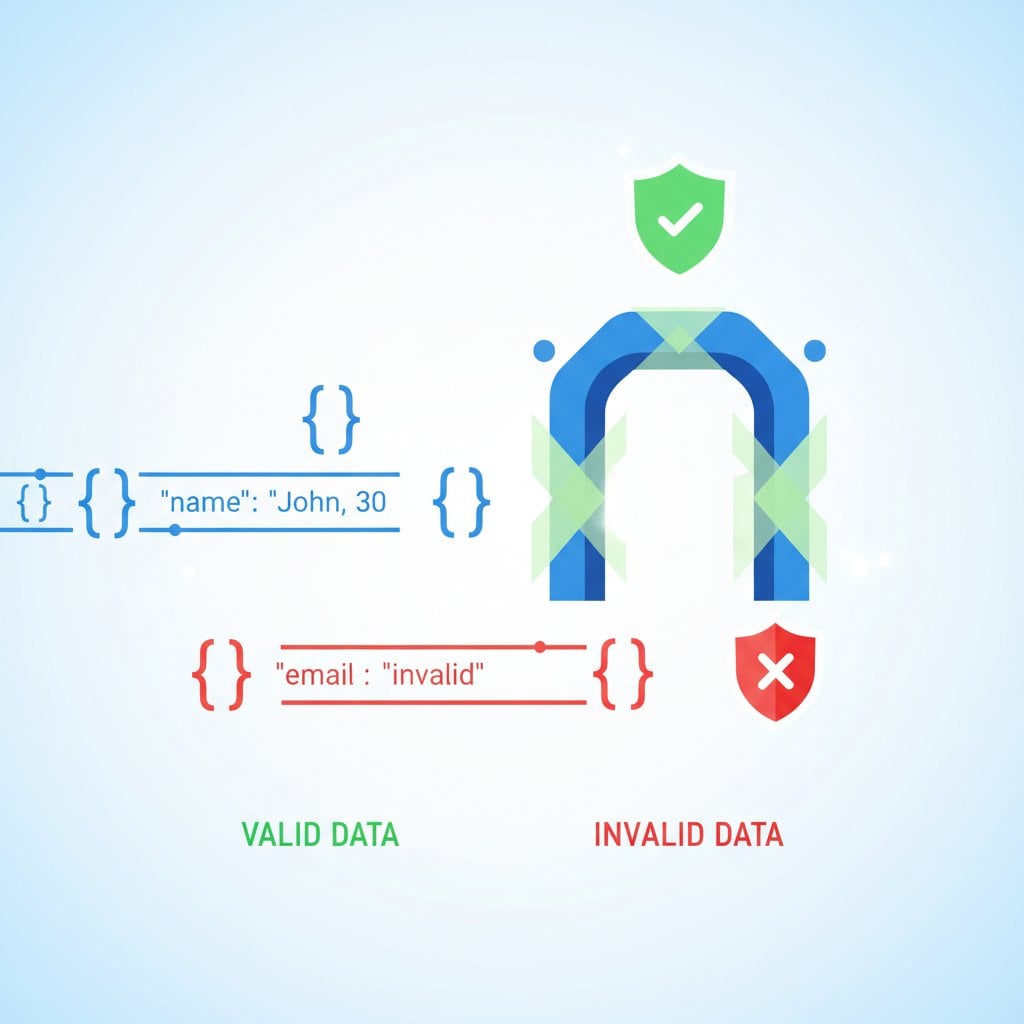
हर API request एक वादा लेकर आती है: आप जो data भेज रहे हैं वो receiving system की अपेक्षाओं से मेल खाएगा। जब यह वादा टूट जाता है, applications crash हो जाती हैं, user data corrupt हो जाता है, और debugging sessions रात भर चलते रहते हैं। JSON Schema validation आपके contract enforcer की तरह काम करती है, malformed data को downstream chaos create करने से पहले ही पकड़ लेती है। SaaS teams के लिए जो दर्जनों integrations manage कर रहे हैं, proper data validation optional नहीं है - यह reliable software की foundation है। यह guide आपको robust JSON structure validation implement करने के actionable steps के through ले जाएगी जो आपके APIs को protect करे और हर transaction में JSON data integrity maintain करे।
मुख्य बातें:
- JSON Schema validation entry points पर malformed data को पकड़कर 60-70% common API integration errors को prevent करती है।
- Development में strict schemas से शुरुआत करें, फिर constraints को तभी relax करें जब real-world requirements flexibility की demand करें।
- Incoming requests और outgoing responses दोनों को validate करें ताकि आपके entire system में data integrity maintain रहे।
- Concrete error messages use करें जो developers को exact बताएं कि कौन सा field fail हुआ और क्यों।
Content Table
JSON Schema Validation क्या है
JSON Schema एक vocabulary है जो आपको JSON documents को annotate और validate करने देती है। इसे एक blueprint की तरह समझें जो आपके JSON data की expected structure, data types, और constraints को describe करता है। जब कोई API request receive करती है, schema एक gatekeeper की तरह काम करता है, processing शुरू होने से पहले हर field को predefined rules के against check करता है।
JSON Schema specification common validation needs के लिए keywords define करती है: required fields, string patterns, numeric ranges, array lengths, और nested object structures। Loose type checking के unlike, schema validation subtle issues को catch करती है जैसे missing optional fields जिनका आपका code assume करता है exist होना, या strings जहाँ numbers होने चाहिए।
JSON data के साथ work करते समय, readability matter करती है। Validate करने से पहले, अपने payloads को properly format करने के लिए JSON beautifier का use करें। Clean, well-formatted JSON schema debugging को significantly easier बनाता है।
SaaS के लिए API Data Validation क्यों जरूरी है
SaaS applications typically multiple external services से connect होती हैं, हर एक के अपने data format expectations होते हैं। एक single malformed field आपके system के through cascade हो सकता है, database records को corrupt कर सकता है या silent failures trigger कर सकता है जो केवल days later surface होती हैं।
इन real constraints को consider करें जिनका SaaS teams सामना करते हैं:
- Third-party integrations - Payment processors, CRMs, या analytics platforms से webhook payloads structure और reliability में vary करते हैं।
- Multi-tenant data isolation - Validation एक tenant के malformed data को दूसरे के experience को affect करने से prevent करती है।
- API versioning - Schemas document करते हैं कि versions के बीच exactly क्या change हुआ, migration errors को reduce करते हैं।
- Compliance requirements - Financial और healthcare SaaS को audits के लिए data integrity prove करना होता है।
एक effective API data validation tool problems को boundary पर catch करता है, invalid data आपके business logic को touch करने से पहले। यह debugging को production firefighting से development-time prevention में shift करता है।
एक Concrete Example - User Registration Endpoint
आइए user registration endpoint के लिए एक practical JSON Schema build करते हैं। यह example real constraints demonstrate करता है जो आप production में implement करेंगे।
{
  "$schema": "https://json-schema.org/draft/2020-12/schema",
  "type": "object",
  "required": ["email", "password", "plan"],
  "properties": {
    "email": {
      "type": "string",
      "format": "email",
      "maxLength": 254
    },
    "password": {
      "type": "string",
      "minLength": 12,
      "maxLength": 128,
      "pattern": "^(?=.*[a-z])(?=.*[A-Z])(?=.*\\d).+$"
    },
    "plan": {
      "type": "string",
      "enum": ["starter", "professional", "enterprise"]
    },
    "company": {
      "type": "object",
      "properties": {
        "name": {
          "type": "string",
          "minLength": 1,
          "maxLength": 200
        },
        "size": {
          "type": "integer",
          "minimum": 1,
          "maximum": 100000
        }
      }
    },
    "referralCode": {
      "type": "string",
      "pattern": "^[A-Z0-9]{8}$"
    }
  },
  "additionalProperties": false
}
यह schema कई practical constraints enforce करता है:
- Email addresses 254 characters से exceed नहीं कर सकते (RFC 5321 limit)
- Passwords में reasonable length bounds के साथ mixed case और numbers required हैं
- Plan selection valid options तक restricted है, injection attacks को prevent करता है
- Company object optional है लेकिन present होने पर validated है
- Referral codes exact format follow करते हैं, validation errors को obvious बनाता है
- Unknown fields
additionalProperties: falseके via reject हो जाते हैं
Other formats से data migrate करते समय, tools जैसे CSV to JSON converter या XML to JSON converter आपके schemas के against validation के लिए data prepare करने में help करते हैं।
JSON Schema Validation के लिए Best Practices
1. हर Boundary पर Validate करें
यह assume न करें कि data clean है क्योंकि यह internal service से आया है। Incoming requests, outgoing responses, और microservices के बीच move होने वाले data को validate करें। हर boundary corruption के लिए एक opportunity है।
2. Development में Strict Schemas Use करें
additionalProperties: false और explicit required fields के साथ start करें। Constraints को relax करना clients के loose validation पर depend करने के बाद उन्हें tighten करने से easier है। Schema issues को debug करते समय, JSON beautifier structural problems को quickly identify करने में help करता है।
3. Actionable Error Messages Provide करें
Generic errors जैसे "validation failed" developer time waste करते हैं। Specific messages return करें: "Field 'password' में कम से कम एक uppercase letter होना चाहिए" developers को exactly बताता है कि क्या fix करना है।
4. अपने Schemas को Version करें
Schemas को अपने API version के साथ store करें। जब आप endpoint का v2 release करते हैं, corresponding v2 schema create करें। यह documentation migrations के दौरान invaluable prove होता है।
5. Edge Cases को Explicitly Test करें
Boundary conditions के लिए unit tests write करें: empty strings, null values, maximum lengths, और Unicode characters। ये edge cases often validation gaps reveal करते हैं।
Multiple data formats के साथ work करने वाली teams के लिए, validation consistency maintain करते हुए JSON और YAML या JSON और XML के बीच convert करना careful schema design require करता है।
Real Constraints जो आपको Implement करने चाहिए
Basic type checking के beyond, ये constraints real problems solve करती हैं:
| Constraint | Use Case | JSON Schema Keyword |
|---|---|---|
| String length limits | Database overflow, DoS attacks को prevent करना | minLength, maxLength |
| Numeric ranges | Quantities, prices, percentages को validate करना | minimum, maximum |
| Enum values | केवल valid options तक restrict करना | enum |
| Pattern matching | Phone numbers, codes जैसे formats को validate करना | pattern |
| Array bounds | Bulk operations को limit करना, memory issues prevent करना | minItems, maxItems |
Actionable Implementation Steps
अपने existing API में JSON Schema validation add करने के लिए इन steps को follow करें:
- Current endpoints को audit करें - Document करें कि हर endpoint कौन सा data accept और return करता है। अपने code में implicit assumptions को note करें।
- Critical endpoints के लिए पहले schemas write करें - Authentication, payment, और user management endpoints से start करें जहाँ data integrity सबसे ज्यादा matter करती है।
- Validation middleware add करें - अधिकतर frameworks schema validation middleware को support करते हैं। अपने route handlers execute होने से पहले validation integrate करें।
- Validation failures को log करें - Track करें कि कौन से fields सबसे often fail होते हैं। यह data integration problems और documentation gaps reveal करता है।
- Schemas से documentation generate करें - OpenAPI जैसे tools JSON Schemas का use करके automatically interactive API documentation produce कर सकते हैं।
Validation testing के लिए data prepare करते समय, JSON minifier performance testing scenarios के लिए compact payloads create करने में help करता है।
निष्कर्ष
JSON Schema validation API development को hopeful से reliable में transform करती है। अपने data के लिए explicit contracts define करके, आप errors को early catch करते हैं, debugging को simplify करते हैं, और ऐसे integrations build करते हैं जिन पर partners trust कर सकें। अपने highest-risk endpoints से start करें, strict schemas implement करें, और coverage को incrementally expand करें। Proper JSON structure validation में upfront investment हर बार dividends pay करती है जब malformed request आपके database को corrupt करने के बजाय gate पर ही catch हो जाती है। Complex integrations manage करने वाली SaaS teams के लिए, schema validation केवल best practice नहीं है - यह essential infrastructure है।
अपने JSON Data को Instantly Format और Validate करें
अपने APIs में schema validation implement करने से पहले JSON payloads को format, validate, और debug करने के लिए हमारे free JSON Beautifier का use करें।
हमारा Free Tool Try करें →
अक्सर पूछे जाने वाले प्रश्न
Basic type checking केवल verify करती है कि value string, number, या boolean है। JSON Schema validation आगे जाकर string patterns, numeric ranges, required fields, array lengths, और nested object structures को check करती है। यह comprehensive approach subtle data integrity issues को catch करता है जो type checking miss कर देती है।
दोनों को validate करें। Request validation आपके system को malformed input से protect करती है। Response validation ensure करती है कि आपका API clients को consistent data send करे और आपके अपने code में bugs को catch करे। यह bidirectional validation especially important है जब multiple teams same API में contribute करते हैं।
JSON Schema default keyword को support करता है, लेकिन note करें कि most validators automatically defaults apply नहीं करते। आपके application code को validation pass होने के बाद default assignment handle करना चाहिए। API consumers को expected behavior समझने के लिए अपने schema में defaults को clearly document करें।
Modern JSON Schema validators minimal overhead add करते हैं, typically typical payloads के लिए 1 millisecond से कम। Performance cost database operations या network latency के comparison में negligible है। High-throughput APIs के लिए, schemas को per request parse करने के बजाय startup पर once compile करें।
JSON Schema केवल JSON documents को validate करता है। हालांकि, आप पहले converter tools का use करके CSV या XML data को JSON में convert कर सकते हैं, फिर अपना schema validation apply कर सकते हैं। यह workflow original source format के regardless consistent data validation ensure करता है।